
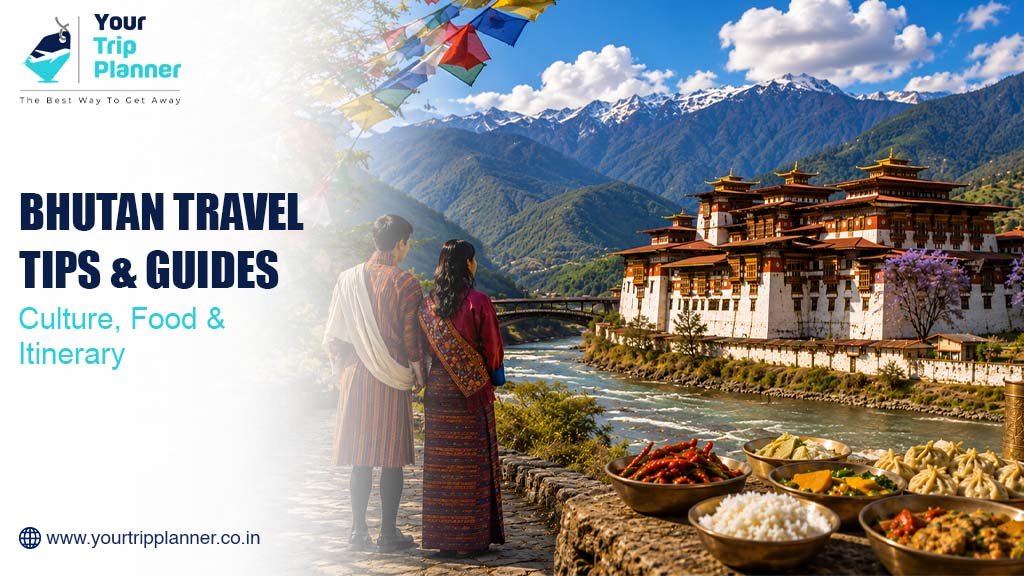
“Bhutan doesn’t just change your itinerary – it changes your perspective.”
This Himalayan kingdom is the one country that doesn’t count its progress in numbers, but in smiles. Where the yellow-robed monks can be found mingling in these winding footpaths with couples in espresso bars, and the dzong perched on top of each hill, judging the roads that recently appeared in the valley below.
Why Bhutan Feels Unlike Anywhere Else
Almost all travellers returning from Bhutan say the same thing: “I didn’t think I would be able to feel so peaceful there.” This isn’t due to the mountains or the monasteries, it’s due to the temperament, the lack of advertising billboards and the genuine smile directed at unknown people without a shred of suspicion.
Bhutan travel is intentionally different. Bhutan does not permit mass tourism and has developed its tourism around the ‘high value, low impact’ policy. When you visit, you’re a guest – not a number.
Planning Your Bhutan Trip from India
Getting started with your Bhutan travel from India is far from a daunting task. A valid passport, voter ID, or Aadhaar card is all that Indian nationals require to board flights to Bhutan. There are three entry points at the border Phuentsholing (road), Bagdogra (via flight from Paro), and Kolkata (via flight). Phuentsholing is the point of entry for most of the travellers coming in from northeast India and West Bengal, and is a natural gateway. Your Trip Planner also provides the best car rental in Bhutan, so you will explore Bhutan without any hassle.
Essential Pre-Trip Checklist
Before you pack your bags for your trip to Bhutan, keep these essentials in mind:
Permit: Indian nationals are required to have a free entry permit from the Bhutan Immigration office at the border or from Paro airport – issued on arrival.
Typical length: 5 to 10 days is the most meaningful duration of trips to Bhutan. Less than 4 days is a rush.
Fee: You need to pay a Sustainable Development Fee(SDF) in Bhutan. The fee is 1200 per person per night. The children below 5 years are exempt from the fee.
Favourable time to visit: There is no best time. It depends on your interest. The clear sky can attract you. The blooming of rhododendrons can excite you. Or the monsoon can bring emotions within you. Choose your time as per your interests. October to May is good for clear skies. March to May for blooming and festivals. July- August is for monsoon lovers.
What to Pack: Keep cash in hand. ATMs are not available everywhere. Carry light, breathable clothes. Also, carry light jackets as the weather in Bhutan is unpredictable. Indian SIM cards may not work – buying a local Bhutanese SIM at the border is cheap and easy. Also don’t forget to carry good hiking shoes.
Currency: Indian currency is accepted in Bhutan. The local currency is Ngultrum, which is equal in value to the Indian rupee.
Bhutan Trip Itinerary - 7 days
This is the way to experience your Bhutan travel peacefully. You can enjoy the trip without any hassle with Your Trip Planner. Here is what it follows:
Day 1 – 2: Arrive at Paro, the only international airport in Bhutan. See the most popular fortress, Rinpung Dzong. Enjoy a walk through the old town in the evening.
The next day, hike to Tiger’s Nest, the famous Taktsang Monastery. It is a 2-3-hour hike, but the slope is much steeper. You will remember these life memories.
Day 3 – 4: Arrive at Thimpu. It is the capital city of Bhutan and small by any standard, but big for its size. See the Buddha Dordenma. It is one of the largest Buddha statues on earth. Visit the National Memorial Chorten. If you like shopping, Thimphu would be one of the ideal places to shop for local Handicrafts and textiles.
Day 5 – 6: Travel to Punakha. It is the most picturesque valley. It has the Punakha Dzong situated at the confluence of two rivers. It is the beautiful structure of the nation as a whole. The most idyllic and peaceful place of the entire Bhutan trip. You will enjoy extensive farms, rice paddies, and hanging bridges.
Day 7: Depart from Paro. Spend this last day walking a final path, or shopping for souvenirs and gifts for family and friends or simply sipping a relaxing cup of coffee at a café before flying home.
Places to Visit in Bhutan Beyond the Classics
Your Bhutan travel doesn’t have to follow the well-worn path. These lesser-known spots are equally extraordinary:
Bumthang: The spiritual capital of Bhutan. It is covered with ancient temples and apple orchards. Great for tourists who prefer fewer tourists. Enjoy authenticity.
Haa Valley: A relatively unpopular valley. It is not so crowded. It has recently opened to tourists. Raw, beautiful and most definitely local.
Phobjikha Valley: A glacial valley. You can see a rare black-necked crane. Great scenery for nature enthusiasts. The ideal time to visit is from November through February.
Cultural Highlights
Bhutan is a kingdom where ancient traditions live on and breathe. It is a land where people wear ancestral robes, perform dances for their gods and value happiness far above money. It is a land that is permeated with belief, food that nourishes your soul, and a respect for all nature. And that spirit is felt in every corner of your Bhutan travel experience.
Religion: Religion is part of daily life in Bhutan. Monasteries and temples are dotted all around the country, and festivals and events are celebrated in the name of the gods and the saints.
Dress: In the public eye, traditional dress is a requirement for all individuals. Men wear the ‘Gho’, which is a knee-length robe and the ladies wear the ‘Kira’, which is a long, woven dress that is long.
Architecture: All buildings are designed to traditional standards, are all painted white and feature carved wooden details. Modern concrete is concealed behind traditional walls.
Festivals: ‘Tshechu’ festivals are a regular fixture at various locations across the country and involve masked dances or ‘Cham’ by the monks.
Happiness over wealth: Bhutan has its own measuring standard for progress, and this is ‘Gross National Happiness’. Well-being over economic growth, and maintaining nature, culture and balance are of the utmost importance.
Nature and Environment: Bhutan is legislated to keep 70% of land undeveloped, therefore the nature of the country is protected and regarded as sacred. Bhutan is the first carbon-negative country.
Arts and Crafts: Thangka painting and weaving are the two main traditional crafts; all crafts are passed down from the elders to the young, and the artisans are highly respected people in the country.
Traditional Food in Bhutan: You Must Try
Bhutanese cuisine is a punchy affair, hearty and with a real kick. While it’s not a subtle cuisine – it’s hearty and perfect for freezing winter mountain temperatures – Don’t hesitate when you’re trying new foods!
The Food of Bhutan Speaks First
Ema Datshi is Bhutan on a plate. Green chillies. Local cheese. One thick, fiery stew. You will not let yourself wait for a second bowl.
Phaksha Paa is slow-cooked pork belly with radishes and red chillies. Served over rich, smoky, deeply comforting – the kind of food the altitude demands.
Momos fit in your hand. Steamed. Stuffed. Finished in two bites. Meat or vegetables – either way, you will crave more. It is the perfect fuel for mountain roads and monastery steps.
Suja will surprise you. Tea with an unusual taste. Salted. Buttery. Rich. One sip and you will know the reason behind the warm Bhutanese morning.
In Bhutan, every meal is an experience. Every sip, a story.
Frequently Asked Questions(FAQs)
Q1. Do Indians need to take a visa to visit Bhutan?
Q2. How much does a Bhutan trip cost?
Q3. Is solo travelling to Bhutan quite safe?
Q4. In which language do the people speak in Bhutan?
Final Thought
Bhutan is for peaceful travellers. It is a carbon-negative nation, and they emphasise “Gross National Happiness”. There is no hurry among the locals. They respect their culture and tradition.
Ready to plan your Bhutan tour. Let us handle every detail – from your first permit to your last meal in Paro. Book your Bhutan trip with Your Trip Planner now.