
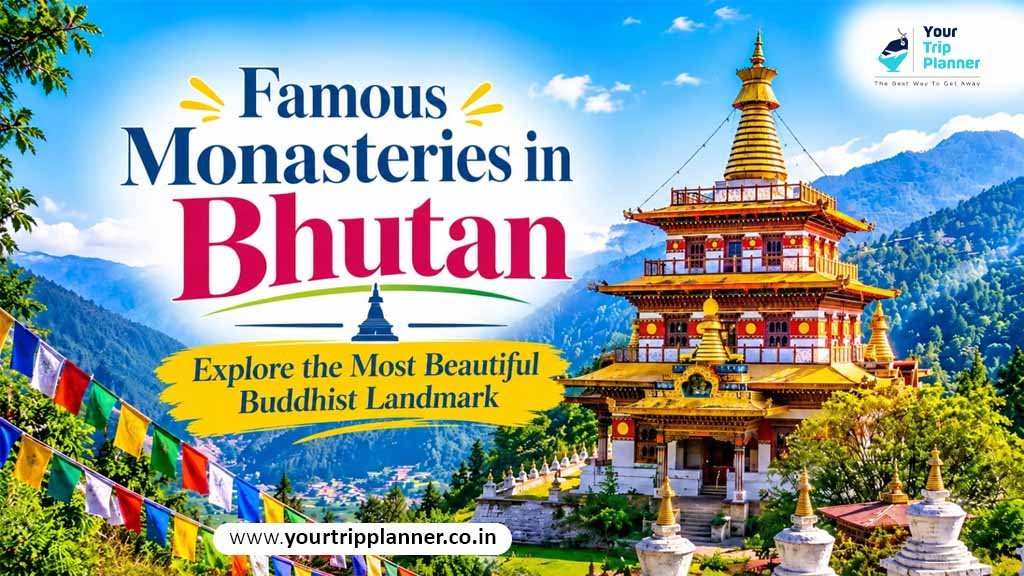
Situated atop cliffs, hidden amidst pine forests and towering over terraced rice fields, monasteries form the cultural hub of the Himalayan nation of Bhutan. Looking for spiritual solace or simply a visual treat? The right Bhutan tours will show you around all its religious sites, dzongs, lhakhangs and temples built on the highest cliffs. This is your ultimate guide to the most prominent monasteries of Bhutan, the unique features of each and how to visit them with ease
Why Monasteries Matter in Bhutan
Bhutan is one of the only countries left in the world that is a Vajrayana Buddhist kingdom. Religion has an integral role in Bhutanese life, from the prayer flags strung along the mountain passes to the monks chanting in the temples of villages.
Many monasteries function as sites for worship, learning, and administration. The dzong is the most common type of monastery. These dzongs have civil servants and monks in residence. Other types of monasteries are the lhakhang (a temple) and the goendey (monastic community).
Tiger's Nest Monastery (Paro Taktsang): Bhutan's Most Iconic Landmark
This list of the best-known monasteries in Bhutan simply has to start here. Paro Taktsang, nicknamed Tiger’s Nest, is built into the face of a huge rock at a height of 900 metres from the ground in the Paro Valley. According to the legend, Buddhist guru Padmasambhava flew here on the back of a tigress and performed meditation in a cave for three months, before the construction of the temple complex in 1692.
The trek will take you four or five hours round trip. You have to walk through a pine forest, among prayer flags, and stop in a cafeteria at half-way point for refreshments. The first sight of the monastery shining against the rock is an unforgettable experience of your trip to Bhutan. Set off in the morning to avoid both crowds and clouds.
Punakha Dzong: The Palace of Great Happiness
Known as the most beautiful dzong in Bhutan, the Punakha Dzong lies in the confluence of Pho Chhu (Father River) and Mo Chhu (Mother River). This dzong was built in 1637 by Zhabdrung Ngawang Namgyal who unified Bhutan and once was the capital of Bhutan.
The white walls, golden roofs, and carvings on the wooden balconies are seen at their best in spring when the jacarandas blossom in the courtyard of the dzong. In the main hall, there are murals and sculptures. The wooden bridge on the river adds beauty to the place. If you have some extra time, make sure that you visit the Punakha Dzong during the Punakha Tshechu festival.
Buddhist Monasteries in Bhutan You Should Not Miss
Apart from the popular attractions, there are many more monasteries worth visiting for those prepared to go that extra mile.
Tashichho Dzong, Thimphu. The government of Bhutan resides here. It is also the summer residence of the central monastic body. At dusk, this place is simply magical and opens up for visitors after the office hours.
Kyichu Lhakhang, Paro. This is one of the oldest temples in the country and dates back to the 7th century. It is claimed that it is one of the 108 temples constructed by the Tibetan king Songtsen Gampo to appease a demoness. The ambience is extremely devout.
Tango and Cheri Monasteries, Thimphu. Two hilltop monasteries in Thimphu. It has tranquil surroundings and houses monastic schools as well. There is a forest trail connecting you to the monastery. Good choice for an early morning trip for travellers wanting some peace of mind.
Trongsa Dzong. The largest dzong in Bhutan, sprawling across a ridge above a gorge. This place served as the ancestral home of the royal family.
Gangtey Monastery, Phobjikha Valley. This Nyingma monastery, which stands on a broad glacial valley, is one of the most interesting sights of the central part of Bhutan. Endangered black-necked cranes migrate from Tibet in November and spend their winter here in Phobjikha Valley, which is celebrated by the Gangtey Black-Necked Crane Festival.
Chimi Lhakhang and the Spiritual Side of Rural Bhutan
It is not necessary that all important monasteries must be large in size. There is one small monastery known as “Chimi Lhakhang,” which is found just a small distance away from Sopsokha village and Punakha and it is devoted to Drukpa Kunley, also known as the “Divine Madman,” an eccentric teacher of the “Divine Humor.” The temple is visited by local couples as a blessing for fertility.
On the way, one will find paintings of phalluses on walls of the village houses.
Best Time to Visit Bhutan's Monasteries
When visiting Bhutan for its monasteries, the best period for your visit will depend on your preference.
- Spring (March-May): You will get blooming rhododendron flowers, sunny weather and festivals such as the Paro Tshechu. It is the most visited period.
- Autumn (September-November): You will have crisp weather, clear sights of the mountains and a crane festival in Phobjikha Valley. It is a good period as well.
- Winter (December-February): There are less people and clear, cold days. Places at low altitudes such as Punakha will be comfortable.
- Summer (June-August): Monsoons will provide greenery but may make trails slippery.
In case you plan to visit Tshechu, ensure to book in advance since hotels and tour guides get fully booked.
Tips for Visiting Bhutanese Monasteries Respectfully
These basic guidelines will make sure that your visit goes smoothly:
- Dress conservatively. This means covering your shoulders and knees, and wearing long sleeves to enter the dzong.
- Take off your shoes and hat before entering temples.
- Photos are normally not allowed in prayer halls. You should always check with your guide.
- Move in a clockwise direction around the stupas, prayer wheels, and temples.
- Never point your feet towards any altar or handle religious objects.
- Talk in low voices and do not interrupt prayers or rituals.
Another reason why an organized package would be helpful is that Bhutan demands a guide license and the payment of a daily Sustainable Development Fee.
Plan Your Monastery Trip with Your Trip Planner
But getting there requires more than just taking a good camera along. Permits, visas, a recommended guide, places to stay, drivers, and planning according to when you are going to be at Tiger’s Nest for festivals will all come into play. This is what Your Trip Planner offers.
Your Trip Planner puts together the packages of the tours that are Bhutanese for you based on what you really wish for. It could be a cultural tour around Paro, Thimphu and Punakha, a festival tour, or even one to Bumthang and Phobjikha. Your Trip Planner will arrange everything from permits, hotel bookings to transports and local guides.
What you can expect:
- Customized itineraries for couples, families, groups and singles
- Guides with experience in explaining history and symbolism of monasteries
- Convenient hotels and stress-free transportation services
- Sound advice regarding the most appropriate season for you
- Help from the moment of your first inquiry to your departure from the airport
If you have monasteries of Bhutan in mind, do not hesitate to contact Your Trip Planner right away and get your own itinerary tailor-made based on your own schedule and budget. Enquire about their latest tour packages in Bhutan, and get ready for an unforgettable experience.
Final Thoughts
From the dizzy heights of Tiger’s Nest to the riverside majesty of Punakha Dzong, the monasteries of Bhutan speak of a nation that has made faith and tradition the heart of its way of life. The experience of strolling through their courtyards, listening to the soft hum of horns, and breathing in the scent of butter lamps and incense is an experience you will treasure for years to come.